Houston's
Deepwater Oil
Terminal.
A deepwater liquid bulk terminal handling crude oil, refined products, fuel oil, biofuels and renewable feedstocks — with marine, pipeline, rail and truck connectivity to the Gulf Coast energy complex.
Liquid bulk infrastructure
built for the global energy trade.
Built for Energy.
Engineered for Flow.
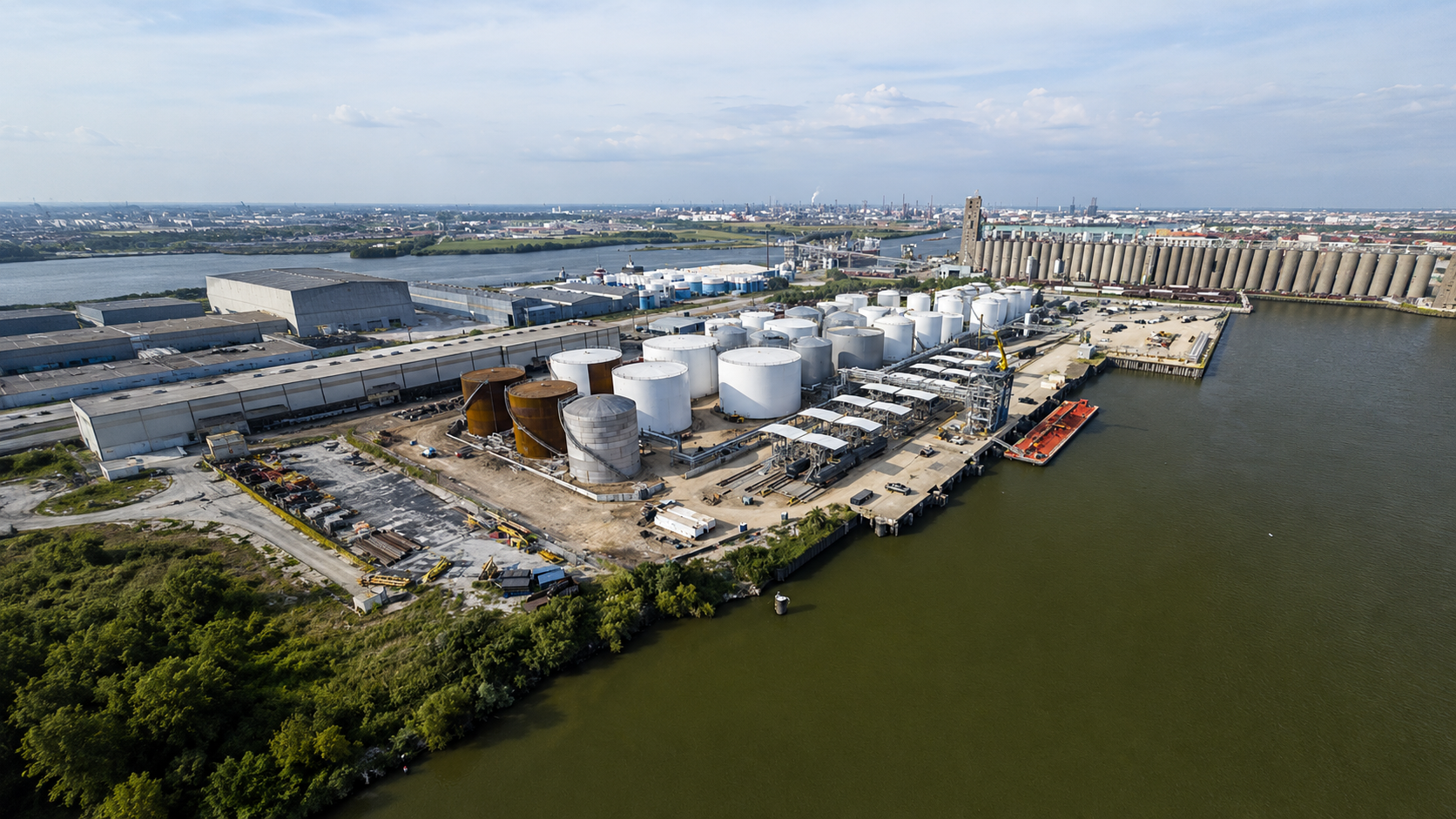
62 acres of purpose-built liquid bulk infrastructure on the Houston Ship Channel — 4.58 million barrels of segregated shore tankage, four deepwater berths totaling 1,830 linear feet, six Chiksan marine loading arms, an 11,400-foot unit-train rail loop and an eight-bay high-throughput truck rack, all tied into twelve Gulf Coast refinery and midstream pipeline interconnects under a single custody chain.
4.58 million barrels.
Every grade.
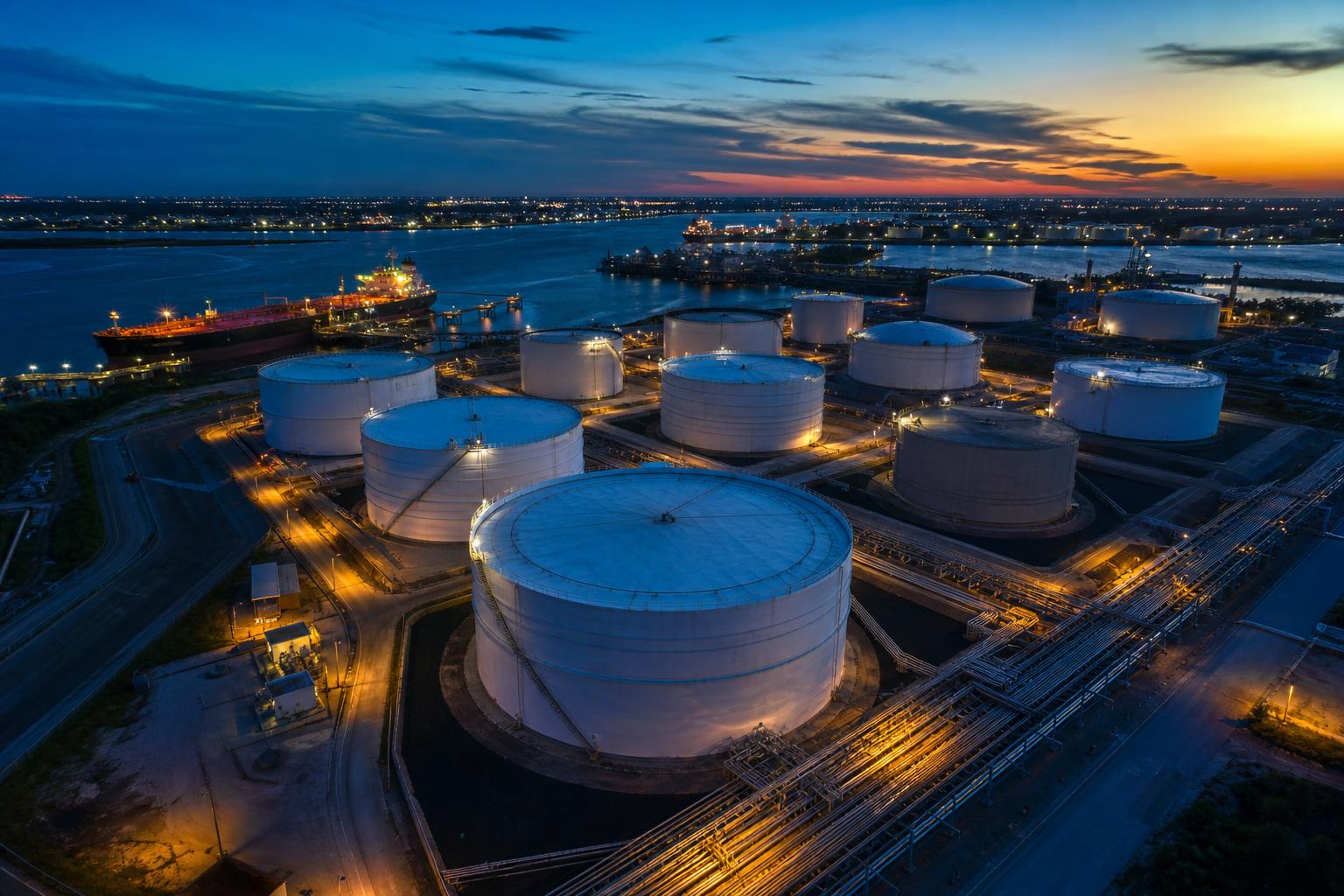
Segregated shore tankage engineered for the full spectrum of liquid bulk hydrocarbons — from heavy sour crude and residual fuel oil to ultra-low-sulfur diesel, jet fuel, ethanol, sustainable aviation feedstock and heated vegetable oils. Every tank is dedicated, gauged, and tied to the integrated manifold and pipeline custody chain.
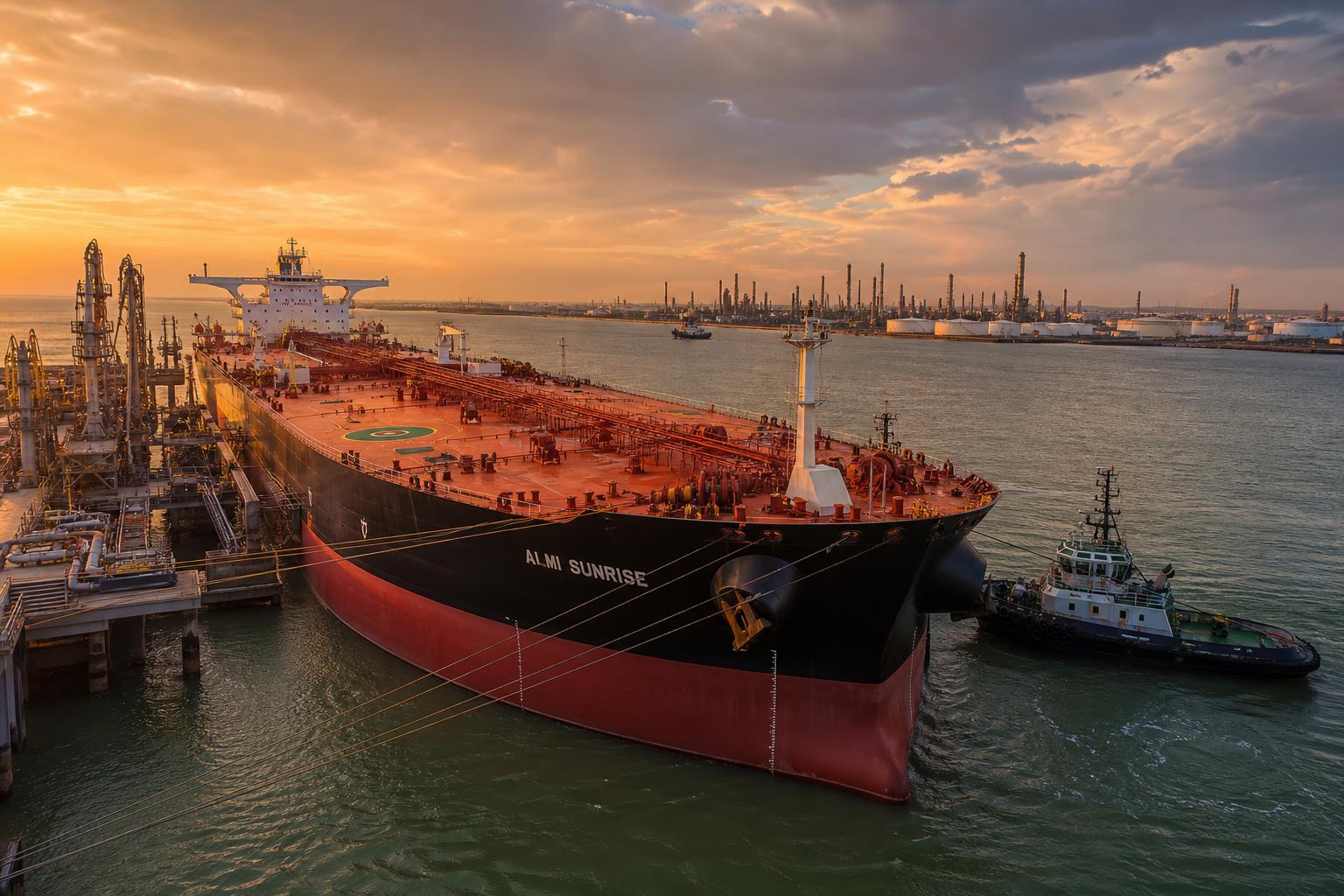
1,830 feet of deepwater dock.
Every class of liquid bulk carrier.
Four berths with 40-foot freshwater draft, six Chiksan marine loading arms, a USCG-regulated and MARSEC-postured terminal interface — engineered to discharge an Aframax in 32 hours and turn a clean-products MR in under 18.
- USCG-regulated MTSA facility
- Marine dock-master coordination
- Tug & line-handler arrangement
- Loading-master oversight
- Vapor recovery interface
- Hot-work & cold-work permits
- Slops & ballast reception
- Independent inspection coordination
62 acres on the
Houston Ship Channel.
Explore the live terminal footprint — tank farm, marine berths, truck rack, rail loop, pipeline manifolds, control facility and security perimeter. Click any zone for specifications and throughput.
16398 Jacintoport Blvd · Houston Ship Channel
Tank Farm Complex
- Capacity
- 4.58 MMbbl
- Tank Count
- 58 tanks
- Services
- Crude, products, fuel oil, bio
- Capabilities
- Heated · insulated · coated
One integrated custody chain.
Four ways out.
Marine, pipeline, rail and truck — every barrel can move four ways without re-handling. Mass-balance reconciliation runs continuously across the platform.
Full-spectrum liquid bulk
and petroleum terminaling.
Crude & Refined Products
Receipt, storage and redelivery of crude, gasoline, ULSD, jet fuel, fuel oil and intermediates across segregated tankage.
Liquid Bulk Storage
4.58 MMbbl across 58 segregated shore tanks — heated, insulated and epoxy-coated services for clean and black oil.
Vessel Load & Discharge
Aframax, Suezmax (partial), Panamax, MR and ATB handling at 1,830 ft of deepwater dock with Chiksan loading arms.
Pipeline Interconnects
Direct manifold connections to 12 Gulf Coast refinery and midstream pipeline systems with API 21.2 custody batching.
Rail & Truck Loading
Unit-train capable 11,400 ft rail loop with 24 loading positions and an 8-bay truck rack with Coriolis mass-flow metering.
Blending & Additization
In-tank and in-line blending, heated commodity service and additive injection for finished product specifications.
Custody & Inventory
Honeywell DCS, automated tank gauging, ATG-tied SCADA and continuous mass-balance reconciliation.
Vapor Recovery & Environmental
VRU-equipped manifolds and racks, secondary containment to API 650, and full TCEQ & EPA permitting compliance.
Security-First Operations
USCG MTSA-regulated, MARSEC I–III postured, C-TPAT validated facility with 24/7 manned monitoring.
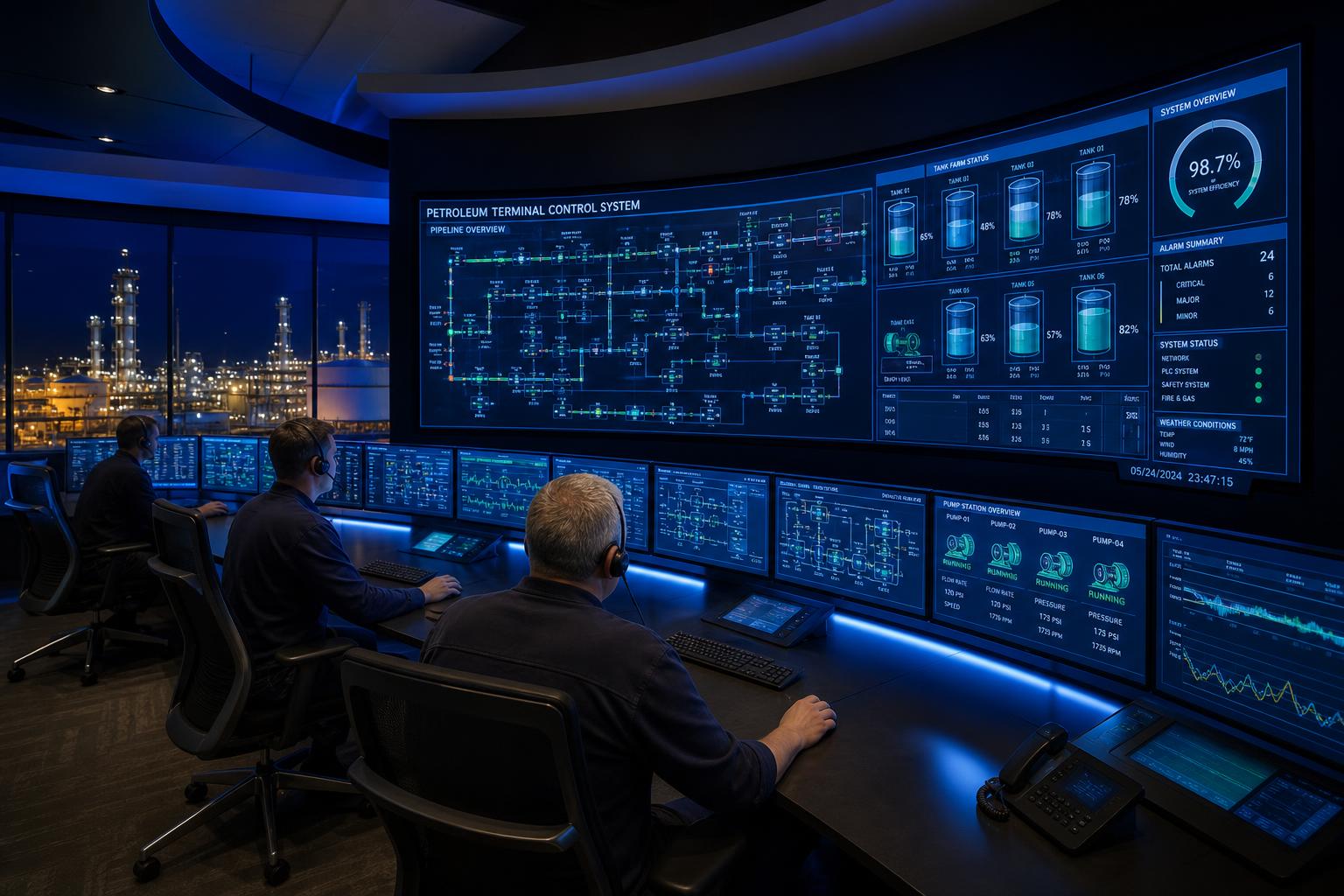
Tier-1 reliability.
Quantitative discipline.
Honeywell DCS, ATG-tied SCADA, continuous mass-balance reconciliation and a 24/7 manned operations center. Every barrel, every batch, every transfer — measured, logged and audit-ready.
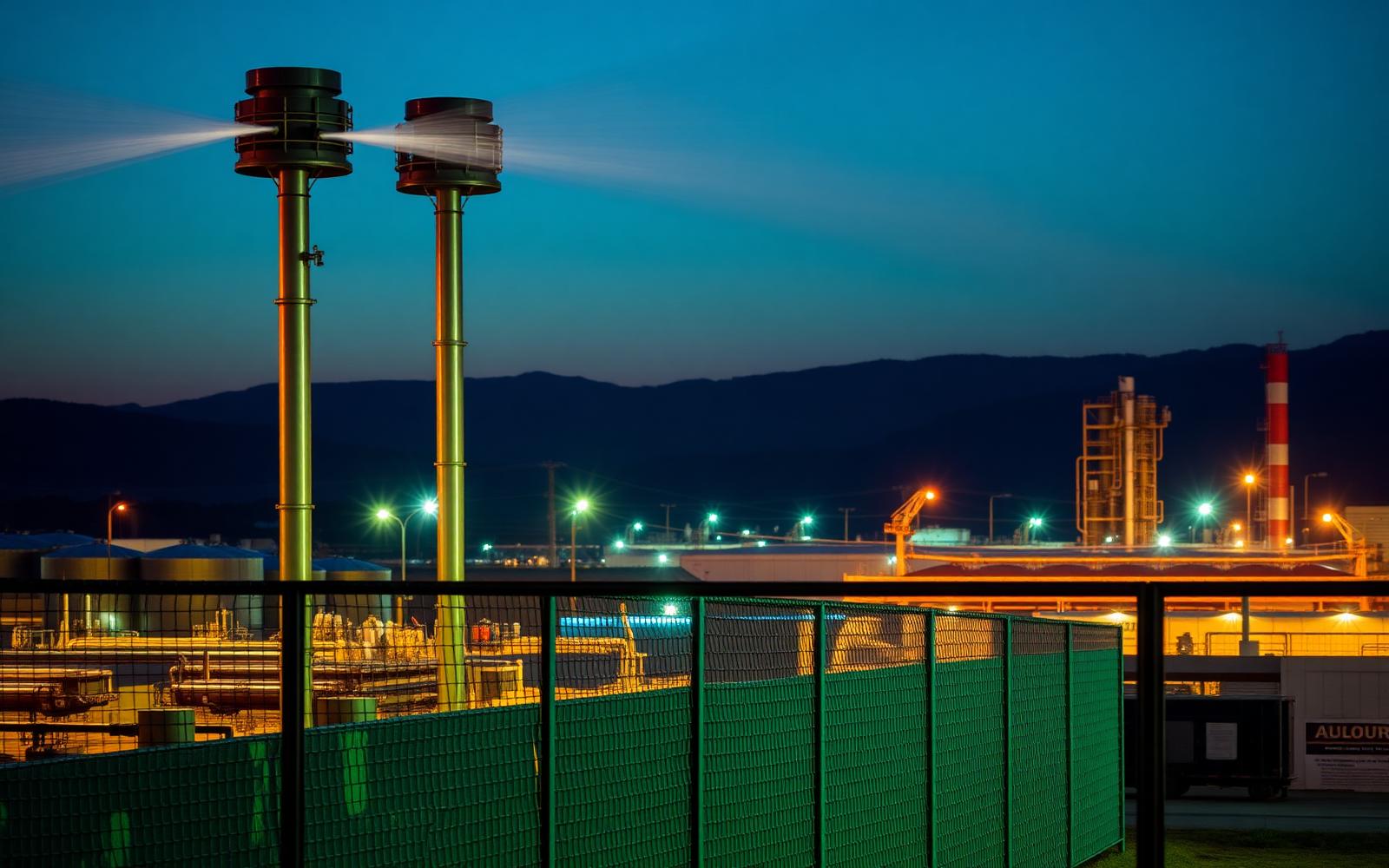
Mission-grade
protection. 24/7.
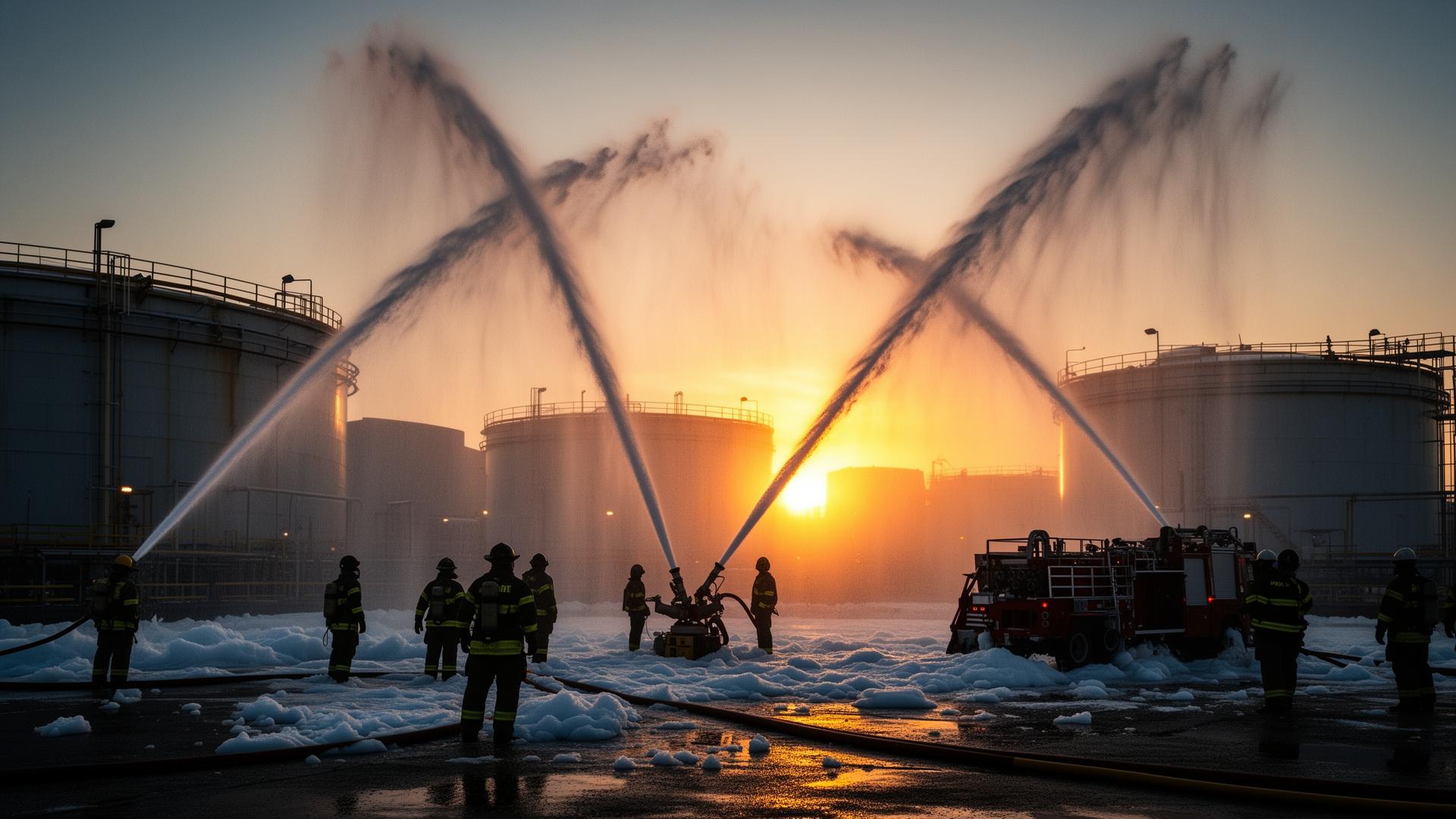
A C-TPAT validated, USCG-regulated MTSA facility operating to OPA-90, API, CFATS and TCEQ standards — backed by vapor recovery, foam suppression, digital surveillance and continuously manned monitoring.

Houston to the
world's refineries.
Active tanker lanes connect Jacintoport to every major refining and trading region — the Americas, Europe, the Mediterranean, the Middle East, West Africa and Asia-Pacific.
Six structural advantages.
One Gulf Coast asset.
Strategic Channel Location
Closer to the Gulf than upriver liquid terminals — fewer transit hours, lower demurrage risk and faster Aframax turnarounds.
Multimodal Integration
Marine, pipeline, rail and truck under a single custody chain — every barrel can move four ways without re-handling.
Tier-1 Reliability
99.97% 90-day operational uptime, redundant systems and four berths means schedule resilience under weather and traffic.
Institutional Security Posture
C-TPAT validated, CFATS-compliant, MTSA-regulated with continuous CCTV monitoring and a 30-day retention archive.
Environmental Stewardship
Vapor recovery, secondary containment, leak detection and OPA-90 response readiness across all product lines.
Global Market Connectivity
Active tanker lanes to the Americas, Europe, the Mediterranean, the Middle East, West Africa and Asia-Pacific refining hubs.
Liquid bulk grades that
move the global economy.
Operational updates &
stewardship reports.
OperationsBerth 2 modernization delivers 18% faster Aframax turnaround
Upgraded mooring dolphins, new Chiksan arms and improved fendering reduce average laytime across primary crude calls.
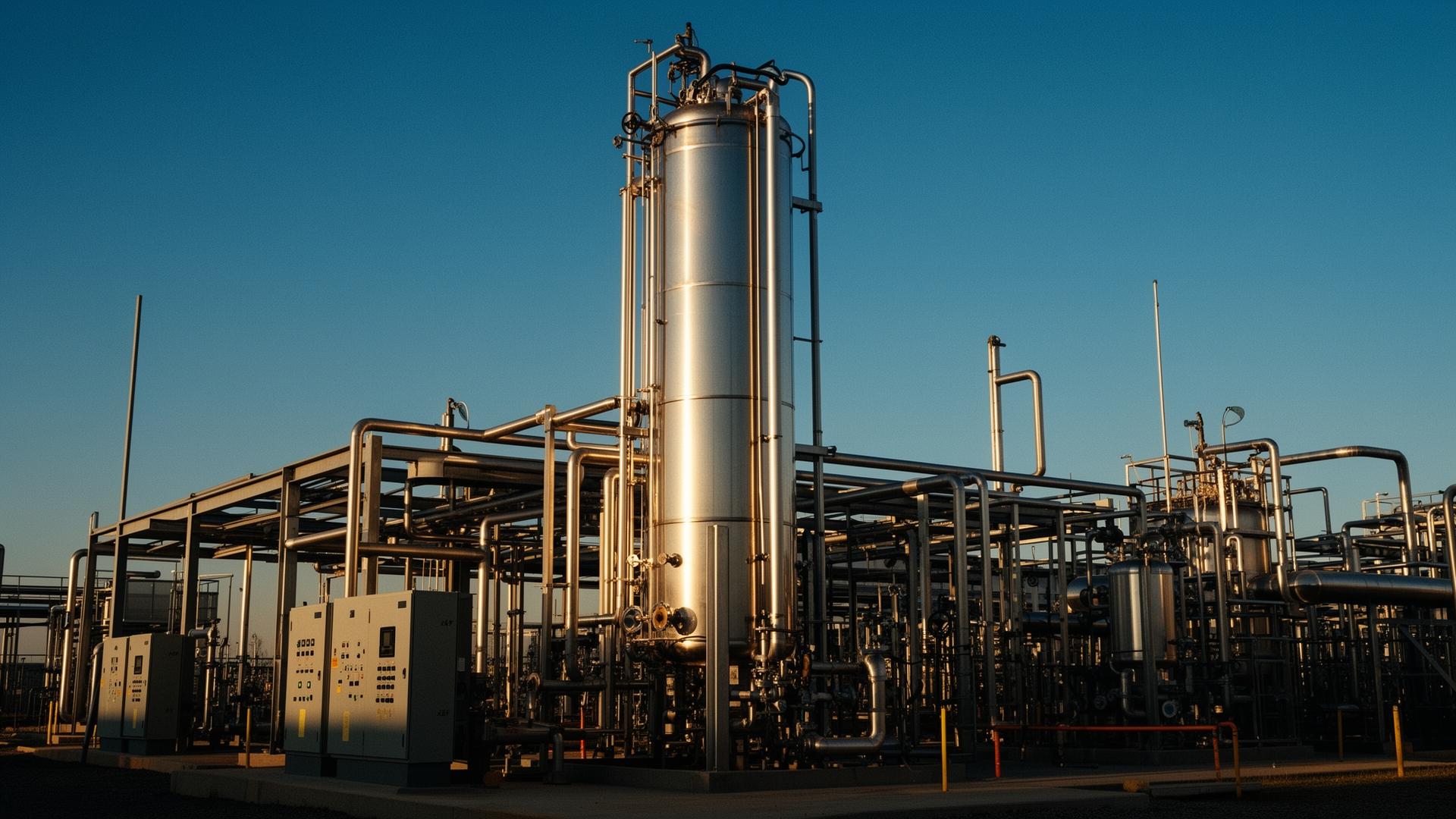 Environmental
Expanded vapor recovery brings Tier-1 destruction efficiency to 99.5%
Second-generation VRU integration across truck and marine manifolds raises destruction & removal efficiency above MTSA limits.
 Workforce
Operations academy graduates third cohort of certified terminal technicians
Twelve-month apprenticeship combines API 653, RP 2003 and DCS instrumentation training with rotational mentorship.
Put Houston's deepwater liquid bulk gateway to work for your supply chain.
Spot, term and tolling structures across crude, refined products, fuel oil, biofuels and renewable feedstocks. Receive a same-day capability brief, indicative rate sheet and berth availability window.